 Ahmad
Ahmad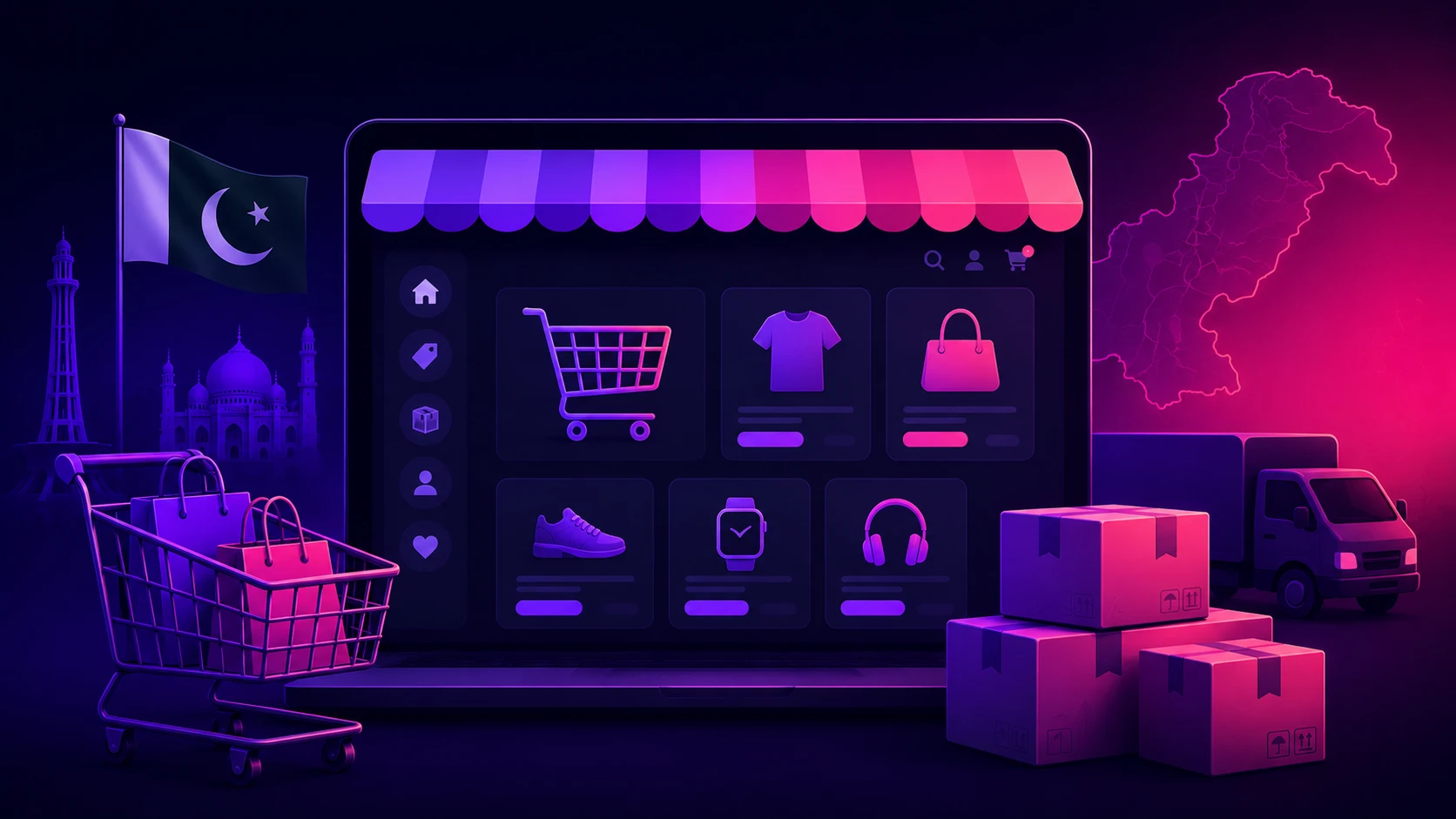
Starting e-commerce in Pakistan is more achievable than ever — here is what you actually need. More Pakistani businesses are moving online every month, and for good reason: an online store sells while you sleep, reaches customers beyond your street, and does not pay rent. But "I want to sell online" and "I have a working store that takes orders and payments" are two very different things. Having built e-commerce platforms, including a store serving thousands of professionals, let me give you a clear, practical checklist of what you actually need to launch in Pakistan.
Start with the foundation: your products and how you will deliver them. Before any code, be clear on what you sell, how you price it, how you pack it, and how it gets to the customer. The most common reason online stores fail is not technology — it is messy operations. Sort out your supplier, your stock, and your delivery method first. The website is the easy part once the business behind it is solid.
Next is the storefront itself. A good e-commerce site needs clean product pages with clear photos, honest descriptions, and visible prices; a simple category and search system so people can find things; a shopping cart; and a checkout that does not confuse or frustrate buyers. The golden rule is that every extra step in checkout loses customers. The fewer taps between "I want this" and "order placed," the more you sell.
Payments are where Pakistan has its own realities. Cash on delivery is still huge here and you should almost certainly offer it, because many customers trust it most. But you should also offer digital options — card payments and increasingly popular wallets — through a payment gateway. Offering both COD and online payment covers the widest range of customers. A developer who understands the local market will set this up properly.
Trust is the invisible currency of online selling. Pakistani buyers are cautious online, and rightly so. You earn trust with real photos, clear return and refund policies, a visible phone number and WhatsApp, genuine reviews, and a professional-looking site. A store that looks cheap or hides its contact details makes people hesitate. Every trust signal you add lifts your conversion rate.
Do not ignore mobile. The overwhelming majority of online shopping in Pakistan happens on phones, often on mobile data. If your store is slow to load or awkward to use on a small screen, you are losing most of your customers before they even browse. A fast, mobile-first store is not optional — it is the main version of your shop.
You also need the boring-but-essential back office: a way to manage products, see and process orders, and track stock. This is the admin dashboard. Without it, you will drown in WhatsApp messages and lose track of what is sold and shipped. A proper order management system turns chaos into a calm, repeatable process — and it is one of the most valuable parts of a serious store.
SEO and discovery matter here too. People search for products, and if your product pages are well-written with clear titles, they can rank on Google and bring you free customers. Connecting your store to social media and, eventually, running targeted ads can accelerate growth, but a well-built, search-friendly store gives you a free stream of buyers from day one.
A quick word on platforms. You can launch on a ready-made platform like Shopify or WooCommerce, or build a custom store. Ready-made platforms are faster and cheaper to start but charge ongoing fees and limit customization. Custom stores cost more upfront but give you full control, better speed, and no monthly platform tax. The right choice depends on your budget and how unique your needs are — a good developer will help you decide honestly rather than pushing whatever they prefer.
Here is the realistic path. Sort your products and delivery, build a clean fast mobile-first store with simple checkout, offer both cash on delivery and online payment, stack up trust signals, and make sure you have a back office to manage orders. Launch, learn from real orders, and improve. You do not need a perfect store to start — you need a working one that you keep making better. The businesses that win online in Pakistan are not the ones with the fanciest sites; they are the ones who launch, serve customers well, and improve every week.