 Ahmad
Ahmad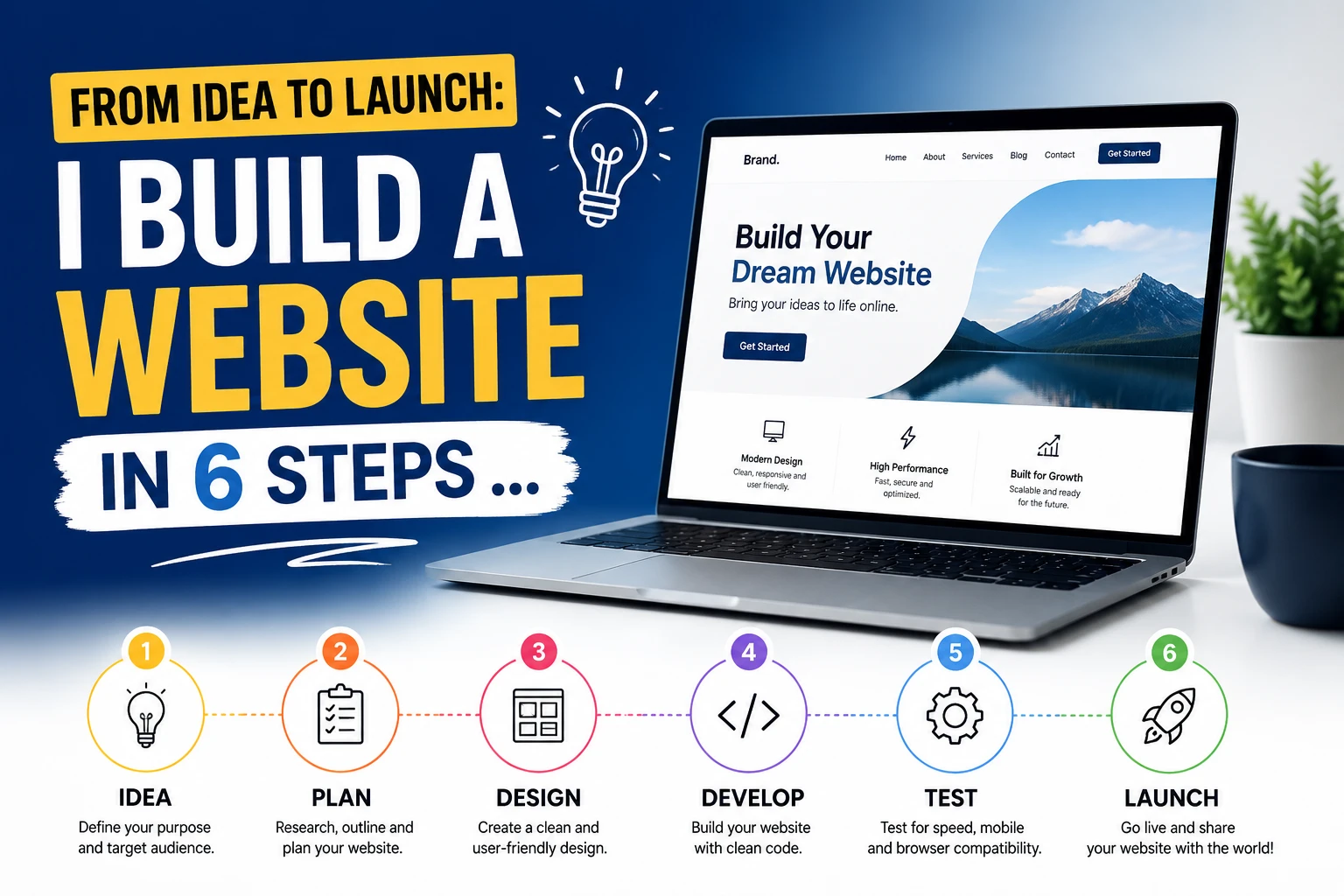
Curious how to build a website from idea to launch? Here is the process, step by step. When you hire someone to build a website, the process can feel like a black box: you hand over an idea and some money, then wait, then a site appears. Understanding what actually happens in between makes you a better client and helps you spot whether your developer is doing things properly. So here is an honest look behind the scenes at how I take a website from a rough idea to a live, working site, in six clear steps.
Step one is understanding, and it is the most important step even though no code is written. Before anything, I want to know what the website is really for. More bookings? More sales? Looking credible to clients? Who are your customers, what do they need to see, and what should they do on the site? A website is a tool to reach a business goal, and skipping this step is how you end up with a beautiful site that does not actually help the business. A developer who starts coding before understanding your goals is building blind.
Step two is planning the structure. Once the goal is clear, I map out the pages and how they connect — home, services, portfolio, contact, and so on — and decide what content each page needs. This is like drawing the floor plan of a building before laying bricks. It prevents the common mess of pages added randomly with no logic. At this stage we also gather your content: text, photos, logo, and the real information that will fill the site.
Step three is design. Now the site gets its look — colors, fonts, layout, and the overall feel that matches your brand. Good design is not just "making it pretty"; it is guiding the visitor's eye to the right things and making the next step obvious. This is also where we make sure the design works on mobile, because most visitors will be on phones. I would rather get the design right here than rebuild it later, so this is a good point for your feedback.
Step four is development — the actual building in code. This is where the design becomes a real, working website: pages are built, the site is made responsive so it works on every screen, features like contact forms and booking systems are wired up, and everything is connected. For dynamic sites, this is where the admin panel and database come in, so you can update content yourself later. This is the longest stage, and it is where real skill shows, because clean, fast, well-structured code is invisible to you but determines how good the site truly is.
Step five is testing, and skipping it is how amateurs ship broken sites. Before launch, every page, button, form, and link gets checked — on different phones, different browsers, and different screen sizes. We test that forms actually deliver, that the site is fast, that nothing breaks. This is unglamorous but essential. A site that looks great in a screenshot but fails on a real phone is a failure. Proper testing is the difference between "it works on my screen" and "it works for your customers."
Step six is launch and handover. The site goes live on your domain, with secure HTTPS, connected to analytics so you can see your visitors, and submitted to Google so it can start ranking. Just as important, I hand over control: you own your domain and hosting, you have access to everything, and if it is a dynamic site, you know how to update it. A real launch is not the developer keeping the keys — it is you owning your own business online.
But here is something most people do not realize: launch is not the end. A website is a living thing. After launch comes the real work — adding content, watching how visitors behave, improving the pages that matter, and keeping things fast and fresh. The businesses that win online treat their site as an asset they keep sharpening, not a one-time purchase they forget.
Knowing these six steps helps you in a simple way: you can ask your developer where they are in the process, and good answers will line up with this. If someone skips understanding your goals, ignores mobile, or "launches" without testing or handing you ownership, you now know that is not how it should be done. A website built the right way — with a clear goal, solid structure, thoughtful design, clean code, real testing, and a proper handover — is one that actually works for your business, long after launch day.