 Ahmad
Ahmad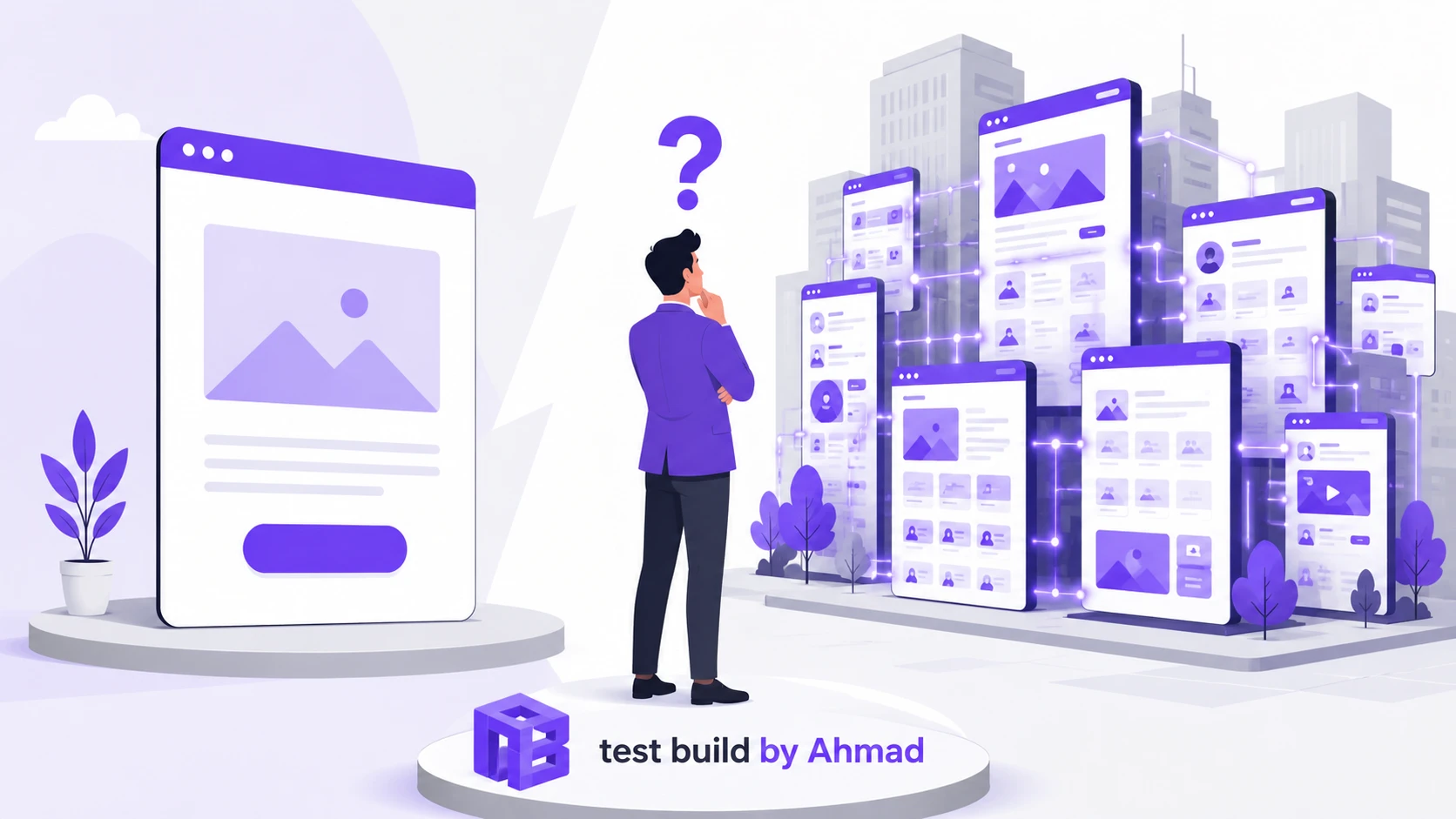
Quick Answer: A landing page is a single focused page built for one action, like booking a call or grabbing an offer. A website is your full online home with many pages. In the landing page vs website choice, pick the page for ads and single offers, and the website for trust and Google traffic.
Picture this. A shop owner saves for months, pays for a beautiful ten-page site, then runs Facebook ads straight to her homepage. Nothing sells.
Across town, a competitor spends a fraction of that on one plain page with a single "Book Now" button. His calendar fills up in two weeks.
Neither of them really understood the landing page vs website question. And it cost one of them serious money.
Here's the good news. The choice is simpler than it sounds. Once you see what each one is built to do, you'll know exactly where your budget belongs. This guide covers the differences, honest costs, and when starting small is the smarter move.
No jargon. Promise.
What's the Difference Between a Landing Page and a Website?
A landing page is one web page with one goal. One offer, one message, one button. There's no menu and nothing to click away to. Visitors usually arrive from an ad, an email, or a social post.
A website is a group of connected pages: home, services, about, contact, maybe a blog. It tells your whole story and lets visitors explore at their own pace.
Think of it like this. A landing page is a sharp sales pitch. A website is your entire storefront.
Why should you care? Because they solve different problems. Landing pages turn paid traffic into leads. Websites build long-term trust and pull in free visitors from Google month after month.
I've built both kinds. The dental group site I created for Fresno, California needed 30+ service pages, a doctor referral system, and Google Maps built in. No single page on earth could carry that job.
Why Getting the Landing Page vs Website Choice Right Matters
Choose wrong and you either overspend or undersell. Choose right and every dollar works harder:
· You spend the correct amount. No paying for ten pages when one would do the job.
· Your ads perform better. A focused page regularly beats a busy homepage for paid traffic.
· You can win Google searches. Multi-page sites rank for many different searches; a lone page usually can't.
· You look credible to careful buyers. Some people want an about page and reviews before they'll trust you.
· You avoid a painful do-over. The right starting point today saves an expensive rebuild next year.
How to Decide Between a Landing Page vs Website in 6 Steps
Step 1: Name Your One Main Goal
Are you pushing a single offer, or building a lasting presence? Answer that and half the debate settles itself.
If your goal fits in one sentence — "get people to book a cleaning" — a landing page probably fits too.
Step 2: Figure Out Where Visitors Will Come From
Paid ads and social posts pair beautifully with landing pages. Google searches need a proper multi-page site to rank.
So ask yourself: am I paying for traffic, or trying to earn it?
Step 3: Count What You Need to Show
List every service, product, and piece of proof you have. One offer fits on one page. Five services across three cities? That needs real pages for each.
Step 4: Be Honest About Your Budget
As typical 2026 market ranges: a simple custom landing page often runs $150–$600, while a full custom small-business site runs roughly $500–$3,000 or more. Design, features, and who builds it all move the number.
Don't stretch for the big site if a great single page gets you earning first.
Step 5: Think Twelve Months Ahead
Will you want a blog, extra services, or an online store this year? If yes, start with a small website instead of a lone page. Bolting pages on later costs more than planning them now.
Step 6: Start Small on Your Own Domain
Here's a smart middle path: launch a landing page on your own domain today, then grow it into a full site. Same address, zero wasted work.
Still torn between the two? You can [ask a full-stack developer for a free, honest recommendation] — someone who builds everything from single pages to 30-page business sites for clients in the US, UAE, Pakistan, and Australia.
What You Win by Choosing the Right Option
· Faster launch — a landing page can go live in days, not weeks.
· Less waste — you only pay for what your actual goal requires.
· Stronger ad results — focused pages lift conversion rates.
· Steady free traffic — a proper site earns Google rankings over time.
· Cleaner tracking — one goal per page makes results easy to read.
· Room to scale — the right base grows with your business instead of against it.
Mistakes People Make With Landing Pages and Websites
Sending Paid Ads to a Homepage
Homepages have menus, links, and five competing messages. Ad visitors get lost and bounce.
The fix: build one landing page per offer, and match the page headline to the ad that brought them.
Expecting One Page to Rank on Google
A single page can target one search at best. Owners then wait months for traffic that never shows up.
The fix: if search traffic matters to you, invest in a multi-page site with a dedicated page per service.
Building a Page With No Traffic Plan
A landing page without ads, emails, or an audience is a billboard in the desert.
The fix: before you build anything, know exactly who will visit and how they'll find it.
Cramming a Whole Business Into One Page
Some one-pagers scroll forever — services, team, gallery, FAQ, all stacked up. Visitors skim, get tired, and forget you.
The fix: once you're past two or three offers, break things into a proper website.
Buying the Big Site Before Testing the Offer
Spending thousands before a single person has paid you is backwards.
The fix: prove demand with a cheap landing page first. Upgrade once the offer earns its keep.
Landing Page vs Website: Costs and Use Cases Compared
The table below sums up the whole landing page vs website decision at a glance:
|
Factor |
Landing Page |
Full Website |
|
Typical 2026 cost |
$150–$600 custom |
$500–$3,000+ custom |
|
Number of pages |
One |
Five to thirty-plus |
|
Best for |
Ads, launches, single offers |
Trust, SEO, growing businesses |
|
Google traffic |
Very limited |
Strong over time |
|
Build time |
A few days |
Two to six weeks |
|
Grows with you |
Not really |
Yes |
Pro Tips Before You Spend a Single Dollar
· Host your landing page on your own domain, never on some builder's subdomain. You keep the SEO history when you grow.
· Write the headline before you hire anyone. Message beats design every time.
· One page, one button. Every extra choice chips away at conversions.
· Demand loading speed under three seconds. Slow pages burn ad money fast.
· Even a single page needs proof — one real review or result lifts trust instantly.
· Going the website route? Give each service its own page rather than one long "Services" list. Google treats every page as a fresh chance to rank.
· Keep your best offer above the fold, the part people see before scrolling.
FAQ: Landing Pages, Websites, and What Fits You
Can a landing page show up on Google search?
It can get indexed, but it rarely ranks for competitive searches. One page can't cover enough ground. For real search traffic, a multi-page site wins.
Can I turn my landing page into a full website later?
Yes, and it's a smart path. Keep the same domain and add pages around the original one. Nothing you built gets thrown away.
Do I need landing pages if I already have a website?
Often, yes. The site earns trust and search visitors, while dedicated pages catch your ad clicks. Plenty of businesses run both together.
Is a one-page website the same thing as a landing page?
Not quite. A one-page site introduces a whole business in scrolling sections. A landing page pushes one single action. Similar shape, different jobs.
Which one suits a brand-new business best?
Match it to your first customers. Running ads from day one? Landing page. Counting on Google and referrals? A small multi-page site serves you better.
How fast can I get either one live?
A landing page can launch in two to five days. A small custom website usually takes two to six weeks. Having your content ready is the biggest speed factor.
Match the Page to the Goal, Then Start
The landing page vs website debate has no universal winner — only a right fit for your goal. One offer plus paid traffic? A landing page earns its keep fast. Building something people find, trust, and remember? A full website is the better investment.
And look, starting small is completely fine. Launch the page, prove the offer, then grow it into a site on the same domain.
Want a straight answer for your exact situation? Send a message through the contact page on buildbyahmad.site and you'll get honest guidance on the landing page vs website call — not a sales pitch.