 Ahmad
Ahmad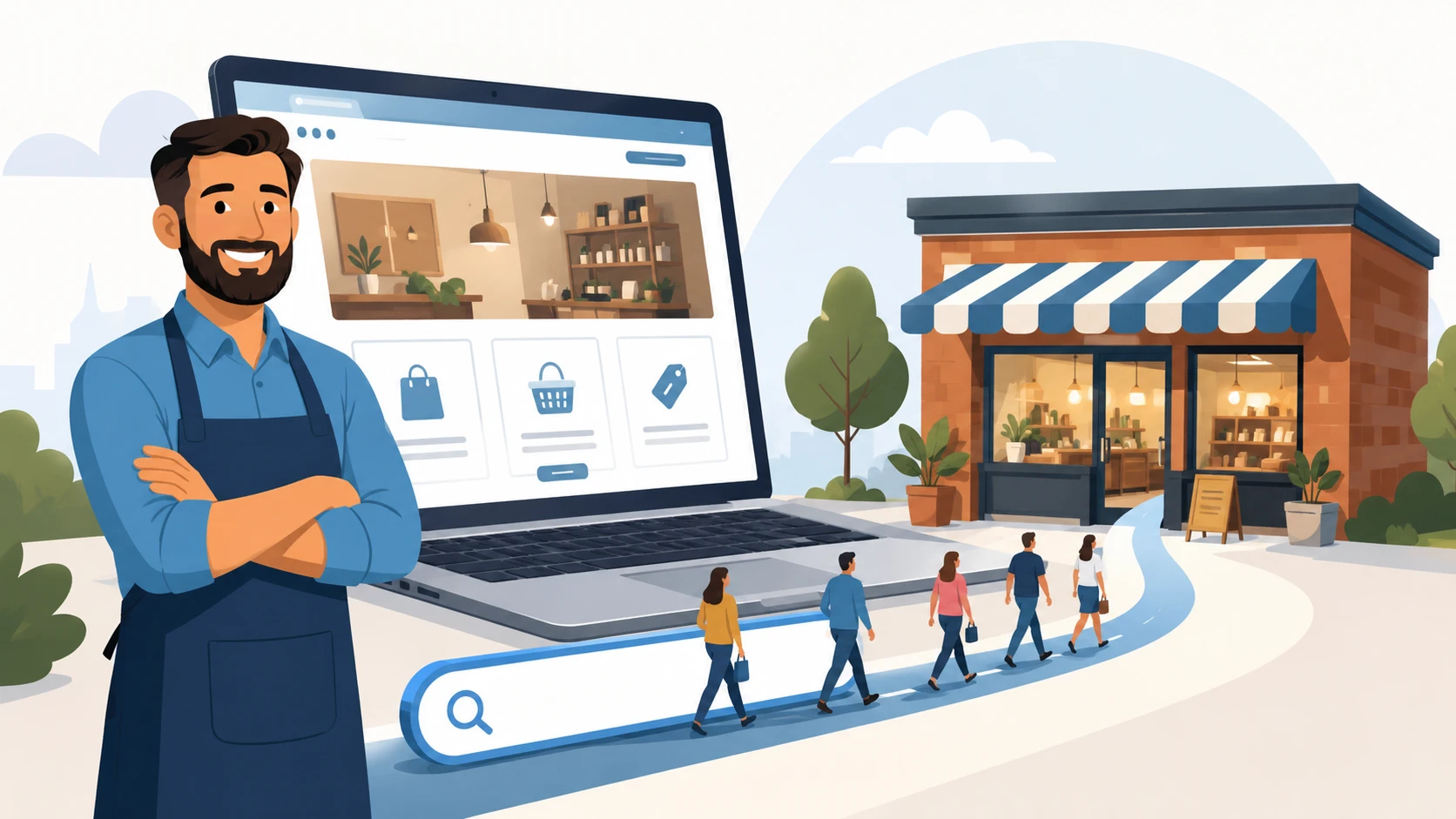
Quick Answer: Yes, every small business needs a website in 2026. Most customers check Google before they spend a single dollar. If nothing shows up, they pick a competitor who does appear. A simple small business website builds trust, answers questions around the clock, and usually pays for itself within months.
Quick question. When someone hears about your business for the first time, what do they do next?
They Google you. Almost every time.
And here's the uncomfortable part. If nothing shows up, most of those people quietly move on. No call. No message. You never even know they existed.
I hear the same line from owners every week: "I get my clients from word of mouth." Sound familiar?
Word of mouth is great. But it has a ceiling. This guide shows you why a small business website matters so much in 2026, what a good one includes, and how to get yours built without wasting money.
Let's get into it.
What Does a Small Business Website Actually Do for You?
A small business website is your own corner of the internet. It's a set of pages that explain who you are, what you offer, and how people can reach you.
Think of it as a salesperson who never sleeps. It shares your prices, photos, and reviews while you're busy running the actual business.
It also does jobs a social page simply can't. It shows up when people search Google. It collects booking requests and quote forms. And it proves you're a real, serious business.
When I built a website with online appointment booking for a dental clinic in Faisalabad, something interesting happened. Patients started booking visits at night, long after the front desk closed. That's the quiet power of a good site. It keeps working when you stop.
Why a Small Business Website Matters More Than Ever in 2026
Let me keep this short and honest. Here's what a website actually does for a business like yours:
· You get found on Google. People search things like "electrician near me" or "best cake shop in town" every single day. No site means you're invisible in those local search results.
· You earn trust before the first call. Buyers check businesses online before spending. A clean, modern site says "we're professional." No site plants doubt.
· You stop leaking customers. Every person who searches for you and finds nothing is a lost sale you'll never measure.
· You own your online presence. Facebook and Instagram can change their rules overnight. Your website belongs to you.
· You take bookings while you sleep. Orders, appointments, and quote requests can arrive at 2 a.m. Try getting that from a business card.
Now, about that word-of-mouth objection. Here's the thing.
Referrals still Google you before calling. Your happy customer tells a friend, and that friend checks you out online first. With no small business website waiting for them, some of those warm referrals go cold.
So a site doesn't replace word of mouth. It catches the people word of mouth sends your way.
How to Get Your Small Business Website Without the Stress
You don't need to be technical. You just need a plan. Here's the path that works.
Step 1: Decide the One Main Job of Your Site
Before anything else, pick the action you want visitors to take. Call you? Book online? Buy a product?
Everything on the site should point toward that one action. A confused site converts nobody.
Step 2: Buy Your Domain Name Early
Your domain is your address on the internet, like yourbusiness.com. Good ones cost around $10–$20 a year.
Grab yours now, even if the site comes later. Short, simple, and easy to spell wins.
Step 3: Gather Your Content First
Collect your services, prices, photos, and a few honest customer reviews. Write down the questions customers ask you most often.
Content delays kill more website projects than anything else. Trust me on this one.
Step 4: Pick Who Builds It
You've got three routes: do it yourself with a site builder, hire a freelancer, or hire a studio. DIY is cheapest but eats your time. A skilled developer costs more upfront and saves you a rebuild later.
As a typical 2026 market range, a simple custom site runs about $300–$1,500 with an experienced freelancer, and more with agencies. In Pakistan, PKR 60,000–250,000 is common. It depends on pages, features, and design — treat these as ranges, not promises.
Step 5: Make It Fast, Mobile-Friendly, and Easy to Contact
Most of your visitors will arrive on a phone. Your site must load in a couple of seconds and look great on a small screen.
Put your phone number, WhatsApp, and location where nobody has to hunt for them.
Step 6: Connect It to Google and Launch
Set up a Google Business Profile and Google Search Console, then link both to your site. This tells Google you exist and helps you appear in local searches.
Launch, share the link everywhere, and watch what happens.
If you'd rather skip the trial and error, you can [get a free quote from a senior full-stack developer] who builds fast, SEO-friendly sites for clients in Pakistan, the USA, Dubai, and Australia.
What Changes Once Your Site Goes Live
Owners usually notice the same wins within the first few months of running a small business website:
· Calls from strangers who say "I found you on Google."
· Fewer repeated questions, because the site answers them first.
· Referrals that convert better, since friends can share a link instead of a phone number.
· A professional first impression, even next to bigger competitors.
· Bookings and inquiries arriving outside business hours.
· One home base you can point every ad, post, and flyer toward.
Common Small Business Website Mistakes (and Easy Fixes)
I've reviewed plenty of struggling sites. The same problems show up again and again.
Waiting for the "Perfect Time"
Owners wait for the slow season, the new logo, the perfect photos. Meanwhile, competitors collect their customers.
The fix: launch a simple site now with the basics. Improve it month by month.
Building It Cheap Twice
A $100 site often becomes a $1,000 lesson. Broken layouts, slow loading, and zero Google visibility force a rebuild.
The fix: spend once on someone who knows their craft. Ask to see live sites they've built before hiring.
Ignoring Phones
A site that looks fine on your laptop can be a mess on a customer's phone. And that's where most visitors are.
The fix: test on a real phone before launch. Tap every button yourself.
Having No Clear Next Step
Some sites describe the business nicely, then just end. No button. No form. No number.
The fix: put one clear call-to-action on every page. "Call now." "Book online." "Get a quote."
Forgetting Google Completely
A site nobody can find is a brochure locked in a drawer. Skipping basic SEO wastes the whole investment.
The fix: use real page titles, describe services in plain words, and claim that Google Business Profile.
Word of Mouth vs a Small Business Website: Side by Side
Here's how the two compare when you put them next to each other:
|
Question |
Word of Mouth Alone |
Word of Mouth + Website |
|
Who finds you? |
Only people your customers talk to |
Anyone searching Google, plus referrals |
|
Works at night? |
No |
Yes, around the clock |
|
Builds trust with strangers? |
Slowly, one story at a time |
Fast, with reviews and real photos |
|
Can it grow? |
Hard to control or scale |
Grows with content and SEO |
|
Cost |
Free, but capped |
One-time build plus small yearly costs |
The takeaway isn't that word of mouth is bad. It's that the two together beat either one alone.
Pro Tips From a Developer Who Builds These Every Week
· Put your city and main service in your homepage title. It helps local rankings more than most owners expect.
· Add three to five real reviews with first names. Names beat anonymous stars.
· Answer your top ten customer questions on the site. Each answer can pull in its own Google traffic.
· Use one professional photo of you or your team. People buy from people.
· Keep your menu to five links or fewer. Confused visitors leave fast.
· Check loading speed with a free tool like PageSpeed Insights. Slow sites bleed visitors quietly.
· Renew your domain for multiple years at once. Losing it to expiry is an expensive headache.
Questions Owners Ask About a Small Business Website
Can a Google Business Profile replace a website?
No. A profile helps you show up on Maps, but Google trusts businesses more when a real site sits behind the listing. The two work best as a team.
I'm not techy at all. Can I still run a website?
Yes. A well-built site needs only minutes of attention per month. Your developer can set things up so editing text feels as easy as typing an email.
How many pages does a small business site need to start?
Five is a strong start: Home, Services, About, Reviews, and Contact. You can add more as the business grows. Start lean.
Will a website bring customers in a small town?
Usually yes, and often faster than in big cities. Fewer local competitors have decent sites, so a solid one stands out quickly.
What ongoing costs should I expect after launch?
Typically a domain at $10–$20 a year and hosting around $5–$25 a month. Some owners also pay for occasional updates or SEO help. That's it for most simple sites.
How long until Google starts sending visitors?
Expect the first trickle within a few weeks and steadier traffic in three to six months. Local searches usually respond faster than national ones.
Your Next Customer Is Googling You Right Now
Here's the truth. Somebody searched for a business like yours today. Without a small business website, that person found your competitor instead.
You don't need anything fancy. A clean, fast site that shows up on Google will quietly out-earn a stack of business cards. Word of mouth built your business — a website multiplies it.
Want honest advice about what your business actually needs? No pressure, no fake hype. Reach out through the contact page on buildbyahmad.site, share what you do, and you'll get a straight answer about cost and timeline.